

AFI Fest 2026: Rose
2026 AFI Fest
Screening as part of the 2026 AFI Film Festival, Markus Schleinzer's Rose follows a young man who enters a 17th-century German village following the Thirty Years' War. This young man, named Rose (Sandra Hüller), claims to be the heir to a local plot of land and begins to integrate himself into the village. However, things are not as they seem — this man is actually a woman who has been lying about her gender for years. The identity she has taken was that of a fellow soldier she knew during the war, with this deception being the only path she had towards freedom from the strict expectations and restrictions of gender at the time.
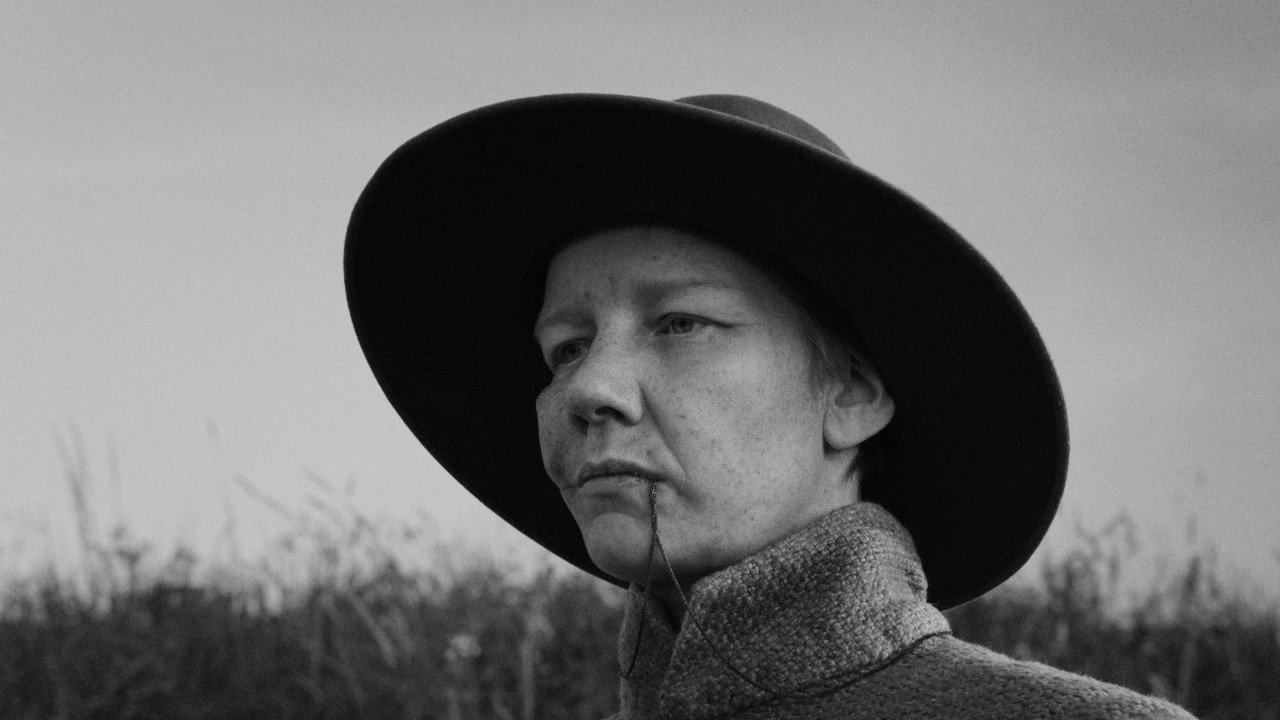
Shot in beautiful black-and-white cinematography, Rose is a thrilling drama that forces the audience to hold their breath as Rose continues to get deeper and deeper in over her head. As Rose begins to settle into life in the village, her connections grow stronger, and she is forced to contend with the natural flows of life. Once Rose builds herself a stable home, she looks to expand by buying additional land. The only way the farmer will let her buy this land is if she marries his daughter, Suzanna (Caro Braun), which is a condition Rose accepts. It becomes clear that Rose is walking a dangerous path as she continues to take risks like this, and the audience is pulled to the edge of their seat, waiting for the shoe to ultimately drop.
However, while both the filmmaking and stakes give the film a bitter edge, there is also a warmth to be found within. Taking place in a time when women are viewed as property and are given no room for autonomy or choice, Rose's bold choices give her a real sense of freedom. When Suzanna inevitably discovers Rose's ruse, she is convinced not to expose her secret at the promise that she also can exist behind a veil of freedom as a result. The pair support each other and build a life that brings them a radical sense of happiness. As a feminist text, Rose is direct and carries a strong impact, as it highlights the resilience and power of women. Rose herself is a subversion of expectations for historical portrayals of women, rising to fight in the war and making herself an active and useful member of society who does everything a man can do.
Rose is played perfectly by Hüller, who has received Oscar buzz for her performance since the film's debut at the Berlin International Film Festival. Hüller gives the character an outer layer of coldness, often feeling quite bitter yet reserved in her portrayal of emotions and thoughts. Rose is a character who has to not only blend in, but also radiate an unquestioning sense of masculinity. However, it is when these walls are broken down that Hüller truly shines, giving a layered emotional performance that packs a punch. Braun is also strong, but Suzanna's character feels like the one truly underwritten portion of the film. Rarely does the film give her time to fully express her thoughts and take control of the narrative, with her expressions always on the sidelines related to Rose's drama. The film is on the shorter side at only 94 minutes long, and it feels like things could have been elevated if even a few extra scenes were added to flesh out this vital character and give Braun more substance to chew on. The pair together have a wonderful chemistry that evolves throughout the feature as more of their secrets are revealed.
While the film is very much centered on what this newfound freedom means for Rose and Suzanna, it also turns to examine the society that would view their happiness and way of life as immoral. Logically, Rose's actions should be of little to no concern to the Protestant village. Rose meaningfully contributes to the village; she causes no problems for others, and she is using land that was abandoned. However, it becomes clear that the mere concept of a woman having this way of life is enough to taint the village's perception of her. Rather than judging her fairly, the community overlooks all the practical traits of the character and instead focuses only on how she goes against their understanding of the world. While this adds to the tension and emotion within the feature, it is also the film's most direct connection to modern events.
In a time when there are a record number of legitimately substantial issues plaguing society and public health, conversations like the inclusion of transgender athletes in their sports have taken over as a main talking point. This is not a logical focus, with the issue causing no practical harm and only 0.002% of NCAA students identifying as transgender in the first place. However, any presence of this identity challenges societal norms, causing it to be brought to the mainstream regardless of how important the conversation actually is. While Rose doesn't directly address the conversation of trans athletes, it works to examine this behavior within a society. The film shows in painful detail how much evil will rise to cull those who challenge even the most harmless of societal expectations. This is the basis for the film's conclusion, which is one of the most viscerally upsetting pieces of cinema released this year.
Rose delivers on its hype, resulting in an incredibly clean drama that stands tall as a poignant feminist text and deconstruction of the illogical nature of societal judgement. Hüller is phenomenal in her leading performance, offering a layered look at identity and power. The film is wonderfully shot and proves capable of evoking gut-wrenching emotion. While there are a few perspectives that could be fleshed out even further, the final result is a thoughtful work that leaves quite an impact.