

Cannes 2026: Species
2026 Cannes Film Festival
In modern life, things can feel endless. Constantly expected to work and sacrifice for an unforgiving system that expects the most from individuals with minimal support or relief, it is easy to see why stress rates are rising and more and more feel like they are losing control. Screening as part of the 2026 Cannes Film Festival, Marion Le Corroller's Species plays with this idea, manifesting the endless stress and expectations put on individuals, specifically young people, as an infection that scars the body and ultimately eats away at the mind, causing the host to have a violent outburst. While overall simple for the genre it belongs to, Species still has enough creativity and effective body humor to be a worthy horror film.
If there is one thing Species gets right, it is in its projection of how relentless life can feel. The film's main character, Margot (Mara Taquin), has just started working in a local emergency room where she is desperate to impress the hospital's lead doctor (Karin Viard). Naturally, Margot finds herself swamped with expectations and work, dealing with the long hours, difficult patients, the weight of having people's health in her hands, and the never-ending expectation of perfection. While the emergency room setting naturally allows for a more extreme situation of stress, many of Margot's struggles will be shared by audience members who are feeling pulled between school, personal life, or work. As Margot begins to crack under the pressure, she begins to notice abrasions on her skin, leading her to notice similarities between her symptoms and those of other patients she has seen. When she brings up the theory that these might be related, she is immediately criticized and shot down with no belief that her thoughts are anything but fiction.
Using infections and body horror as a way to voice social commentary and reflection is nothing new. From the rage virus of 28 Days Later to the effects of the titular drug in The Substance, this idea has been seen many times, yet Species feels notably clean in its portrayal. The film knows exactly what message it is trying to say, and never stumbles as it applies the deeper concept to its practical world. Taking place in a hospital, the film is able to examine its infection in a more grounded way than many similar films, employing stunning makeup effects to bring it to life. The body horror in the film is gnarly, truly coming off as disgusting in the best of ways as skin and flesh mutate. Even for those who have experienced the genre before, Species has enough to leave an impact.
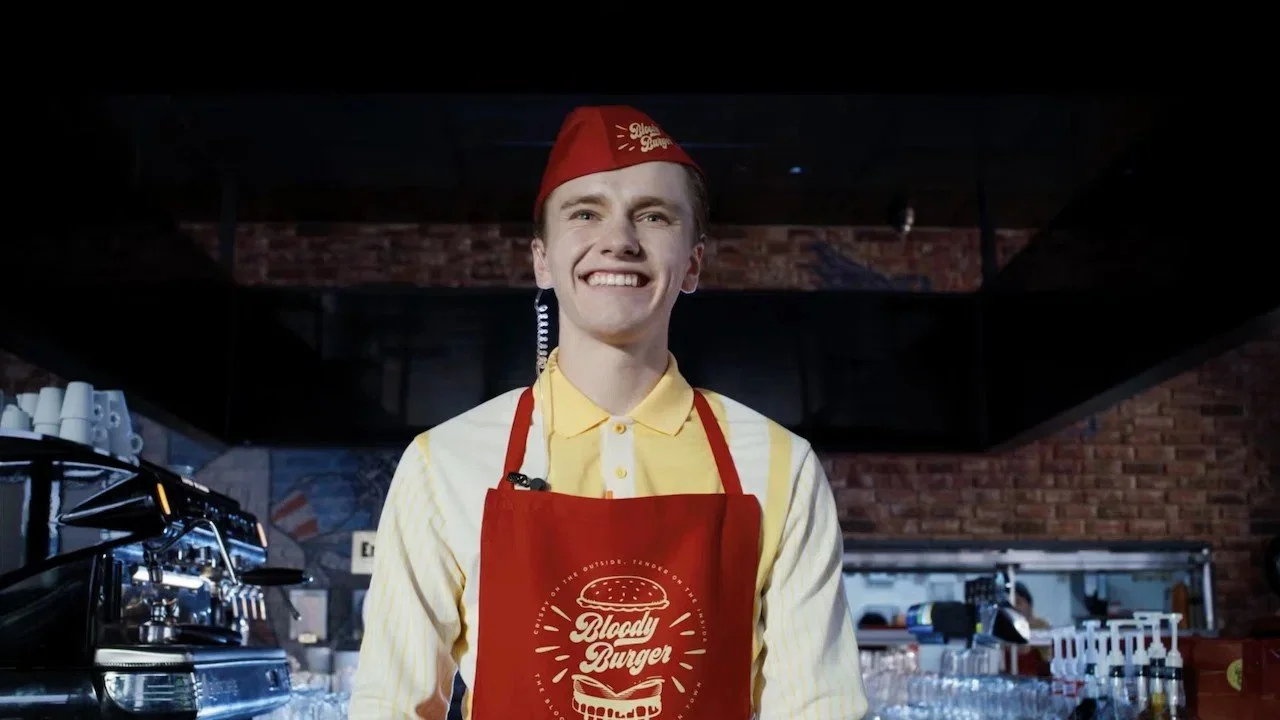
Having the infection eventually lead to violent outbursts is another natural way for the film to grow. The film wants to keep the energy up with selected scenes of bloody violence, such as the opening, where a fast food worker is finally pushed to his limit and unleashes on his irritating and entitled customers. These scenes are delightful, perfectly upping the violence with great directing from Corroller. It is beyond impressive how naturally the film is able to build a plot that naturally brings it to these points, never feeling forced or contrived. So many horror films of a similar nature struggle to find a way to get to these extremes, but Species is a model example of how it can be achieved.
Species is a fantastic horror film. Both understanding how to employ fun and substance, the feature is a satisfying viewing experience that is a wonderful example of what the genre can be.