

The Odyssey
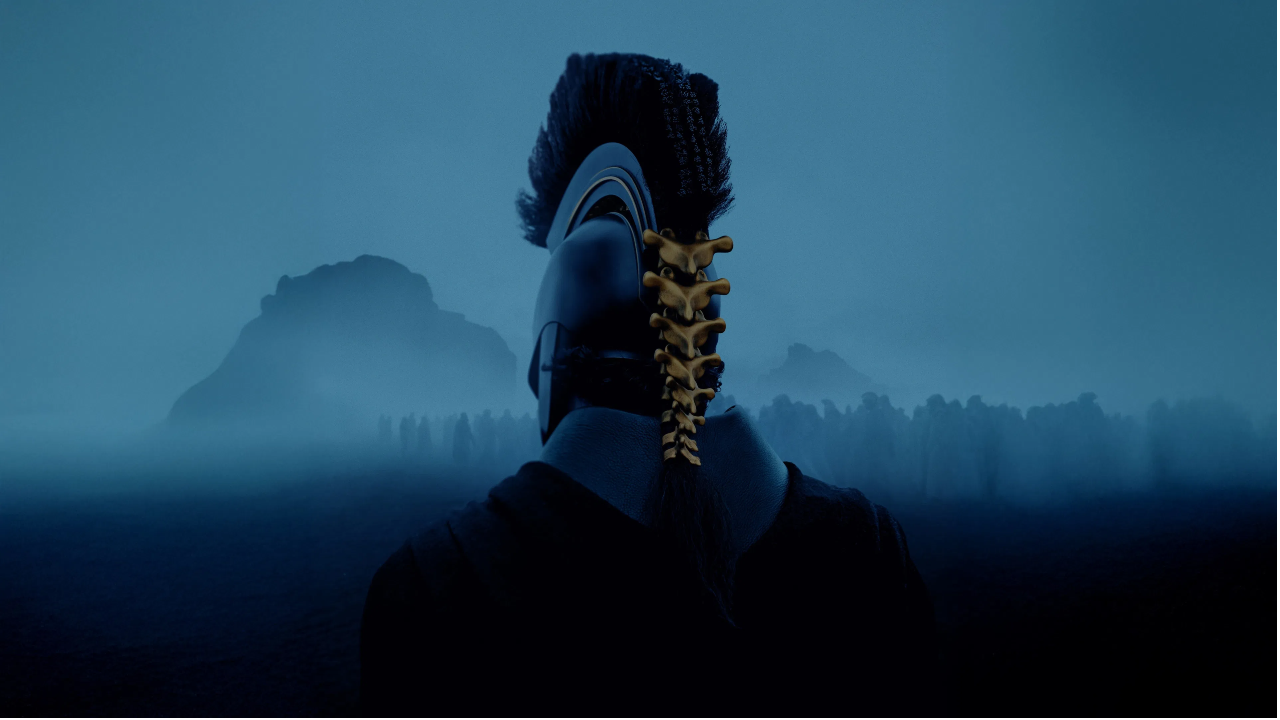
Universal Pictures
Coming off of a Best Director and Best Picture win for Oppenheimer, it felt like Christopher Nolan had the world at his fingertips and could do no wrong. After masterfully bringing to life the deeply complex story of J. Robert Oppenheimer, Nolan would turn his efforts to adapting Homer's Odyssey. One of the foundational texts in the known history of human storytelling, Homer's Odyssey is a beast of an adaptation to try and tame, but Nolan rose to the challenge and created The Odyssey. Using Emily Wilson's 2017 translation of the text as a guide, Nolan reworked the story to fit as a 3-hour epic, charting the turbulent journey of Odysseus (Matt Damon) as he tries to find his way home to his son Telemachus (Tom Holland) and wife Penelope (Anne Hathaway). Meanwhile, a group of suitors, including the cunning Antinous (Robert Pattinson), waits at Odysseus' home, trying to marry Penelope as hope fades that he will ever return.
Similar to when Denis Villeneuve completed his adaptation of Dune, a level of praise has to be given that The Odyssey exists at all. The source material is a massive story, with most adaptations choosing to focus on a specific section of text rather than trying to concern themselves with the whole story. While Nolan is forced to make some radical transformations to the text and what he includes to fit in a single runtime, a process that leads to some mixed results as an adaptation, it is remarkable still that a film of this craft and size made it onto the big screen at all. The visuals throughout are consistently impressive, with the scope of the huge world being felt as Odysseus roams across sea and land with his dwindling crew following their victory in Troy. Nolan has never disappointed as a director, and his impeccable streak continues here. Especially in the film's various set pieces, Nolan outdoes himself with engrossing visuals and wonderful plays of atmosphere and tone. Perhaps more than ever before in his career, the director embraces horror filmmaking with both the Cyclops (Bill Irwin) and Circe (Samantha Morton) scenes standing tall as the film's best sequences.
Of course, the filmmaking credit transcends being the work of Nolan alone. Hoyte van Hoytema's cinematography brings this world to life, both in its grandest and more intimate moments. It speaks volumes to be able to say that Ludwig Göransson delivers possibly his best score to date, truly creating some jaw-dropping sequences when blended with the film's booming sound design, which has to be a shoo-in for award love later in the year. The costume design by Ellen Mirojnick and the production design by Ruth De Jong, both of whom previously worked on Oppenheimer, are always on point. It is clear that Nolan assembled a dream team to bring this film to life, and as a technical experience, the work is near flawless.
In many ways, it feels like it is the set pieces and larger swings of action that Nolan has the clearest interest and vision for and drove him to want to create the film, as it is in its writing between these segments that the film threatens to break apart. These standout scenes are cast in a sea of confused morality and world-building, with Nolan struggling to capture both the world of the original story and the specific message he wants his film to carry. While it would be easy enough to point to nearly every scene of the film and point out how the film foundationally changed its design and makeup from the original text, the more overarching problem is how the film handles the gods. In Homer's text, the gods are a constant presence both in the minds of the characters and physically in the world. From Athena guiding Telemachus when he sets off to find the fate of his father to Poseidon crashing into Odysseus with fury as he escapes from Calypso, Homer's Odyssey is a story defined by these larger-than-life characters. From the film's epigraph, which reads "A time of apparent magic", Nolan casts doubt on the existence of the gods and almost entirely removes them from the narrative outside of brief flashes of Athena (Zendaya), who appears to Odysseus in a handful of scenes.
By removing this crucial element, the actual narrative of The Odyssey begins to fall apart. The film still vocalizes a conversation about the gods, specifically the importance of following Zeus' Law, but is limited in how effective these conversations can be. The film consistently undercuts itself, mixing up messages and struggling to make a cohesive thesis. The film will go from a raging declaration about Odysseus defying the gods, to whom he doesn't believe anyway, so the weight of this statement is lost, to a message about how important it is to let go of control and let higher forces guide you. It also doesn't make sense as the world is still largely built by mythical gods and supernatural powers. This is some of the worst world-building seen in any Nolan feature, and is a disappointing follow-up to what he managed in Oppenheimer.
The story itself is also very oddly paced. Forced to condense and reorganize itself, the film tries to touch on the different plots of Homer's works but does many of them no justice. Characters like Calypso are completely destroyed from their original identities, and narratives such as Telemachus' journey to find news of his father are so rushed and pushed to the background that their inclusion at all is questionable. When there has to be an over 2-hour gap between the start of an arc and the next moment of progress in it, there is little point in trying to act like you are doing that arc justice. Many characters disappear from the film like this, both weakening the larger story being told and making the long 173-minute runtime show its length in the worst of ways. While any deviation from the original story is going to cause some to roll their eyes, as even slight differences in translations of the text can lead to fiery debate, a certain level of adaptation is needed to translate a work like this to a cinematic narrative, and The Odyssey doesn't find the right balance. If Nolan didn't want to cut even more of the project, which reportedly had already trimmed much of what was filmed, it feels necessary that the film should have been split into at least 2 films to allow this story to have the space to be told properly.
Sadly, most of this criticism and debate will be ignored and overlooked as the film's reception has become dominated by racists crying over Lupita Nyong’o's casting as Helen and her sister Clytemnestra. Make no mistake that this largely faux outrage has nothing to do with Nyong’o's ability as an actor, which has been proven time and time again, but rather is the newest edition in the modern culture wars led by racist online figures and groups. Nyong’o could give the worst performance in film history, and these arguments would still not be authentically substantiated or validated. For her brief appearance, Nyong’o is one of the more consistent performances against a cast that does have multiple clear miscastings. The Odyssey is not an actor-friendly film, rarely giving anyone the time or substance to leave an impact. While there are a handful of performers who do rise to create standout personas, both Hathaway and Morton are easy shoutouts; many struggle with what they are given. While Holland works well at the start of the film when his character is a naive and frustrated boy desperate to fill the shoes of his father, when it comes time for his character to rise to a more powerful position, his efforts feel genuinely laughable at times. Others, such as Timothée Chalamet in David Michôd's The King, have had a similar journey and brought the correct level of power when needed, but Holland falls quite short.
Damon lacks much of the range needed for his character in the more emotional reflections his character undergoes, feeling quite inconsistent. Pattinson chews up the screen as much as he is allowed to, but much of his character's wickedness is given to Antinous' friend Polybus (Corey Hawkins), forcing Pattinson to be pushed to the side far too often. Theron and Jon Bernthal are both rather weak, but the blame feels more a result of the material they are given than their acting ability. Sadly, even Travis Scott gets wasted with the unique promise of using rap to recontextualize the presence of a bard and make a statement on the history of Homer's work as a piece of oral poetry, never appears. The cast list goes on and on, with roles continuing to grow smaller and smaller from there. Because of the writing and editing of the film, this is a stacked cast of talent done quite dirty by a film that doesn't know how to play to their strengths.
While the film might not be a disaster, these flaws not only rip the film away from being worthy of being discussed as a masterpiece, but also drop it towards the bottom of Nolan's entire filmography. While the set pieces are actual perfection, a film is more than a series of cool action scenes. Especially for a project of this length and potential, there needs to be proper organization and thought in the story being told. Things have to flow, momentum has to be maintained, and the message has to be coherent. The Odyssey, as a completed picture, fails to succeed in any of these ways. Ironically, considering the text being told and the emotional journey Odysseus goes on, it feels like Nolan has finally bitten off more than he can chew.