

AFI Fest 2026: The Diary of a Chambermaid
2026 AFI Fest
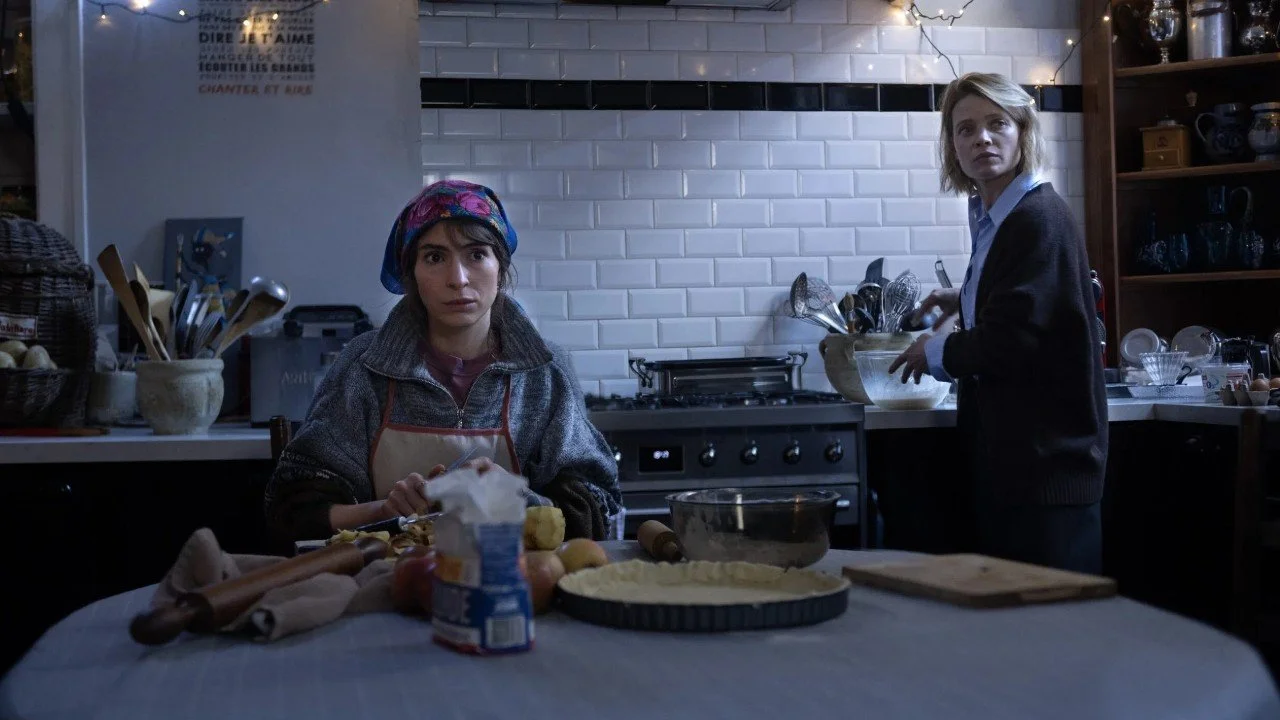
A self-described "variation" of Octave Mirbeau's original 1900 novel, The Diary of a Chambermaid sees Romanian filmmaker Radu Jude at his most restrained and thoughtful. Updating the story to modern France, the film trades Mademoiselle Célestine R. for Gianina (Ana Dumitrașcu) — a Romanian immigrant caring for a wealthy family in Bordeaux, away from her mother and daughter. Over 120 years have passed since Mirbeau's original novel was published, and the world has changed. Marguerite (Mélanie Thierry) and Pierre (Vincent Macaigne) do not hurl the same abuse and cruelty towards Gianina as those in the novel; instead, they have an exterior of respect for her and her personhood, with Marguerite even getting her to join a local theater group that is putting on a production of The Diary of a Chambermaid. However, underneath this kind surface, the undercurrents of exploitation and selfishness remain.
Much more grounded than Jude's other recent works, The Diary of a Chambermaid excels at putting the audience in the shoes of Gianina. Rather than give in to immigrant stereotypes, Jude portrays Gianina as a layered, realistic character that exists beyond that sole identity. Her dialogue is full of personality and attitude, with Gianina getting more and more frustrated as she is pulled in different directions. Outside of her escape on the stage, Gianina's main push and pull comes from the time she spends divided between caring for the Donnadieu family and being there for her own daughter. Gianina needs work, and her employment as a housekeeper is a stable income that she can send back home. The Donnadieu family are also far more fair and kind than many other options for employment — in a quite powerful scene, Gianina relays the trauma of her previous employers to the Donnadieu family, who are horrified at the behavior. They also push her to explore her interests and have personal freedom. While we spend time with Gianina maintaining the house, we also follow her as she has dinner with friends and makes videos around town to send to her daughter. This isn't to say that Gianina has an easy time — she specifically faces questions about self-identity due to the way the society around her treats her as an immigrant — but largely this seems like one of the best possible situations for her position.
However, this is not a concept that is easy to explain to her daughter, Maria (Sofia Dragoman). Maria has to practically live without her mom being present, and it takes a massive toll. On their regular FaceTime calls, Maria begs her mom to come visit and grows increasingly angry at her being away. This devastates Gianina, who has no choice but to press on. The film does not take the practical consequences of this lightly, and goes further in discussing the deeper issue of this dynamic. One night, Gianina tells Marguerite and Pierre's son, Louen (Louen Bouteiller), a story about a young man who spends his life searching for an immortality promised him at birth. After searching, the man tragically realizes that he has wasted the years he had alive in this search, robbing him of any life at all. While the story freaks Louen out and makes him ponder the eventual death of his parents, it is also a story that connects to Gianina. Away from her family, outside of brief breaks, she has largely removed herself from being there for her daughter's life. As the years pass, Maria will change as she grows up — with there being no endpoint where her mother will be able to consistently be there for that journey. It is an impossible situation for Gianina, as she also has to be the breadwinner for her family, leaving her with no choice but to sacrifice.
This concept is further highlighted by Jude's filmmaking. Like reading the various entries of a diary, the film flashes between calendar dates over a period of months as we follow Gianina's countdown to her Christmas visit home. This externalizes the passing of time, slowing it down to make the audience painfully aware of every day that stands between Gianina and her release. Plenty of days are short segments, highlighting a mundane task that Gianina has to take care of around the house. The film does not want to give the impression that the weeks are filled with grand adventure, but rather purposefully shows how empty so much of this waiting actually is. This is the strongest point of tragedy for the film, with this difficulty being reflective of the real-life experience of many.
Of course, some would point out that Gianina is lucky to have a break at all. In his modernization of Mirbeau's novel, Jude finds a conversation about the evolution of service work. Naturally, a conversation is formed as the condition of Gianina's employment is put in context with Mademoiselle Célestine R.'s treatment in the stage version of the novel that Gianina acts in. This is pushed further by Gianina's videos capturing Bordeaux and the remains of its history of slavery. Decorations on buildings still show the faces of black enslaved individuals who were brought to the city to work. While the external conditions of these situations have seen drastic change, internally there are similarities to the exploitative power dynamics that exist within each form of the same system. The world does not turn without the exploitation of those who have no other means of survival, trapping them in a system that is nearly impossible to escape. Even if laws and the appearance of freedom change, it isn't like Gianina is actually in a position to drastically change her situation. She is trapped by a system that has existed long before her time in France, and one that will exist long after.
While Radu Jude has impressed before with his commitment to ambition, the filmmaker finds one of his strongest voices with The Diary of a Chambermaid. Jude slows the film down and focuses it to point directly at the societal system of exploitation — not with an eye for blind criticism but rather a mature pondering on what it both offers to the employee and robs them of.