

Cannes 2026: Blaise
2026 Cannes Film Festival
Screening as part of the 2026 Cannes Film Festival, Blaise opens with the Sauvage family gathering in the school counselor's office to discuss 16-year-old Blaise (Timéo) and his social standings at school. It has become a concern that Blaise has no friends, which his parents respond to by forcing him to go to a party to meet new people. Adapting the popular comic book collection of the same name, which was already turned into a series in 2016, Blaise is an often hilarious look at just how messed up people can be. While the spoken concern is towards Blaise and his failure to live a standard life, it quickly becomes apparent that everyone in the story has their own flavor of insanity, often leading to entertaining scandals and messy explosions.
Blaise's screenplay, written by co-director Dimitri Planchon and Clémence Lebatteux, is easily one of the funniest comedies of the year. Clearly having worked out any wrinkles during the 2016 series, the film is able to coast flawlessly with impeccable comedic timing and a natural raising of intensity as Blaise finds himself deeper and deeper in the chaos caused by those around him. At the party his parents force him to attend, he meets a girl named Joséphine (Nina Blanc-Francard) and the pair begin a relationship. Through a series of misunderstandings, Joséphine thinks Blaise is a radical activist who is open to using violence to make political statements. To impress Blaise, Joséphine becomes increasingly eager to cause these violent incidents, resulting in hilarity as the film continues to one-up itself into absurdity. Blaise's parents are no better. From his pitiful father, Jacques (Jacques Gamblin), to his confrontational mother, Carole (Léa Drucker), who struggles to make those at work not fear her to the point that she accidentally starts a relationship with one of them, the film is a delicious mess to consume and savor.
In a time where so much is spoken about how lost and tragic new generations are, it is also nice to have a text that pushes back at this notion. It doesn't take much to look around and realize that every facet of life is currently in shambles. While one can exclusively focus on the flaws facing younger generations, the same criticisms and fears can be seen across every age group. While Blaise is a lighter comedic work that never truly attempts to find a grandiose statement, the reflection still shines through and is a welcome change of pace compared to how most comedies would portray a coming-of-age story such as this.
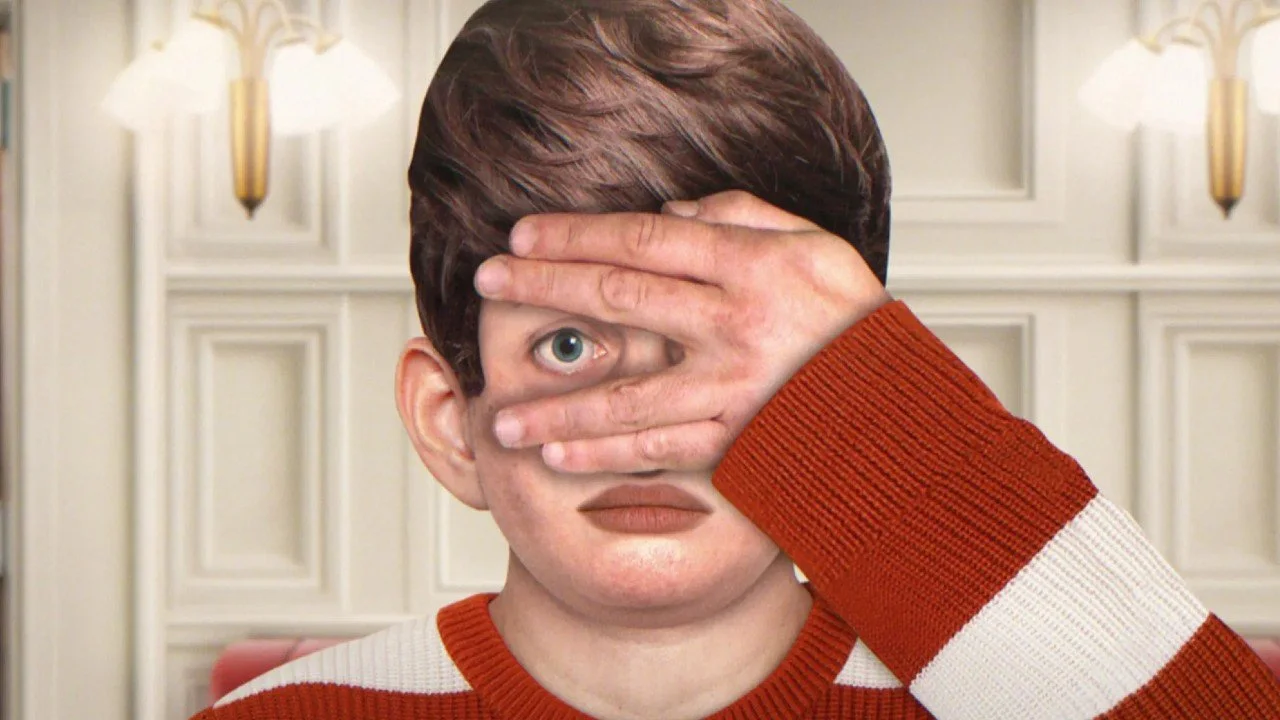
When adapting a text with a specifically unique style of artwork and design, films can often struggle to put the aesthetic in motion, rarely turning out as clean and effective as Blaise does. While the hyper-realistic details of the human face put in animation is a style that can take some time to get used to, the animation quickly becomes a positive feature of the film. Just smooth enough, the film has an off-kilter effect that further dramatizes the absurdity of the situation while maintaining a needed watchability. The character designs are purposely ugly, but are animated in a way that completely works. It helps that the shot composition is extremely aware of how to organize the screen to match this quirkiness, embracing some of the same effect that would make the works of Wes Anderson as iconic as they are. If the film is aware of what it's doing, creating a picture that is just slightly off, it can work with that on every layer of the production, creating a sense of artistry in the final product that is thoughtful and purposeful.
Few animated comedies are quite as strong as Blaise. Every choice in the film is carefully considered, and every choice is the correct one. The film is hilarious, bringing the audience in with its quirky charm and elevating itself beyond expectations. This is a great film to see with a crowd, and is undeniably one of the animated highlights of the year.