

SDAFF Spring Showcase 2026: Mārama
2026 San Diego Asian Film Festival Spring Showcase
Screening as part of the 2026 San Diego Asian Film Festival's Spring Showcase, Taratoa Stappard's Mārama is a brooding film of anger and trauma, following a young orphaned Māori woman named Mary (Ariaana Osborne) who travels from New Zealand to Yorkshire, England, when a stranger says they have details about her parents. While there, she meets Nathanial Cole (Toby Stephens), who offers pleasantries and a home for Mary, but as she spends her time in the manor, more and more horrors are revealed to her. Stappard has built a career out of telling stories about different responses to cultural trauma, specifically that of Māori as they reckon with the over a century-long effort of colonization put on their community and culture. Mārama is, without a doubt, a strong addition to this filmography, offering a crowd-pleasing and gothic approach.
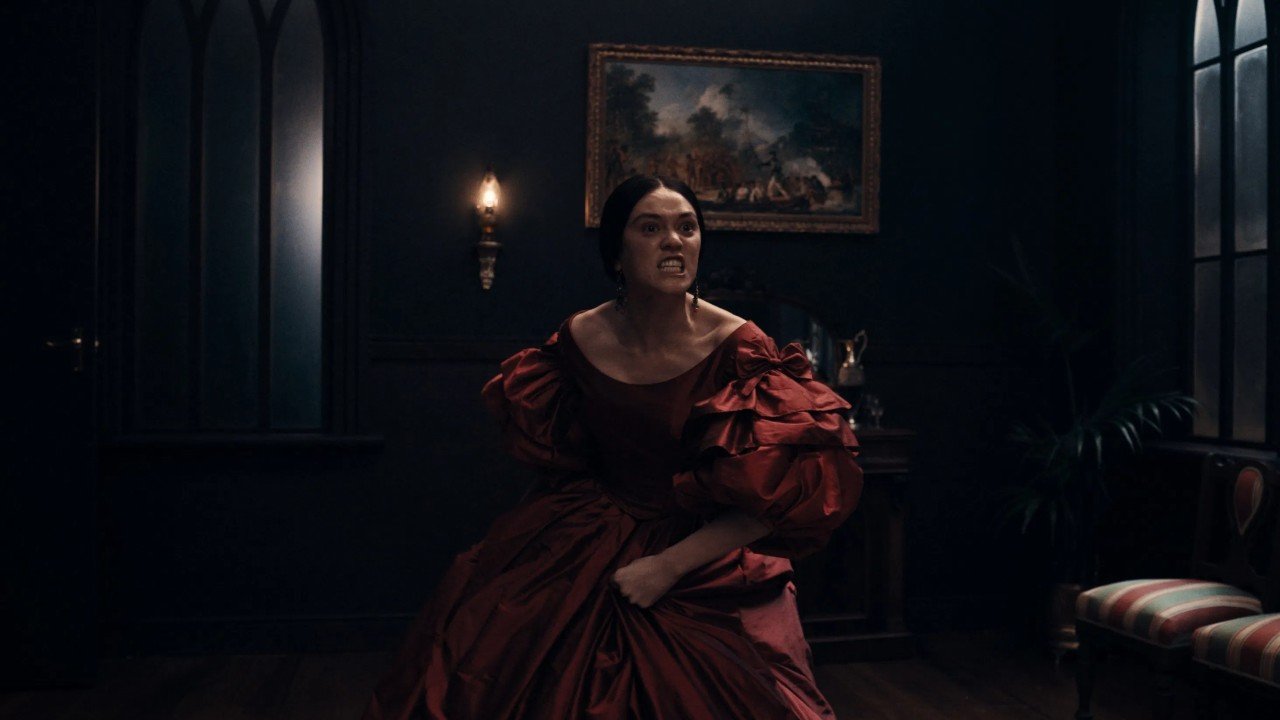
Every part of the film is brooding from the opening scene. Like a pot of water put on a stove, things initially seem calm, but more and more turbulence begins to boil. The film is shot perfectly by Gin Loane, turning physical locations into portraits of shadows and space, with rooms and manors becoming characters of their own. The gothic identity of the film is flawless, both using the expected conventions of the genre while introducing new flares and flavors. This includes the usage of iconography attached to the Māori culture, often put in juxtaposition with the English manor and performance of wealth and power. The filmmaking feels confident and clear, never getting lost in the genre it is embracing and always being thoughtful of the development of tone and style.
This lays the groundwork for Mary's journey, which is brought to life by a tour de force performance from Osborne. Mary is a rich character, one who is connected to her culture while also lost due to the absence of her parents. Mary has walls built, but also wants to be receptive and personable. There is a lot building under the surface of this character, which slowly leaks out until it reaches a point of explosion at the end of the film. Osborne plays this flawlessly, showing an incredible ability to transition from a position of restrained expression and captivating emotion. As the audience follows her to England, Osborne's performance becomes the main anchor holding the audience to the deeper emotions and points the film is projecting, specifically in its conversation of colonization. Osborne always delivers, never flinching.
However, the weight of Osborne and the complexity of the perspective she shares is also one of the film's struggles to write for in its final act. While there is a grand display of anger, a rightful emotion to have considering the decimation of the culture being discussed, this ultimate response can feel somewhat shallow compared to the depth of the subject. The lasting horrors of imperialism and colonization are unthinkable. These forces forever altered the people and land of New Zealand, and are an unimaginable force of evil and racism. The film engages this conversation, but ultimately feels like its conclusion cannot bear the full weight of the dialogue it is trying to have. While satisfying on a basic viewing experience level, further reflection can cause pieces to feel underwhelming. This is not an easy problem to fix, as trying to craft any narrative that speaks to this weight is near impossible, but it is also felt harsher when the film has to prioritize a solution that works under a genre framework.
While not perfect, Mārama is still an effective piece both of genre filmmaking and cultural messaging. The film captures real-life evil and offers a cathartic release against it. While the film is unable to flush out the entirety of the attached weight and emotions, what it offers still plays well, and Ariaana Osborne deserves far more praise and attention than she will end up getting when the best performances of the year are listed.