

Fantasia 2025: Dog of God
2025 Fantasia Film Festival
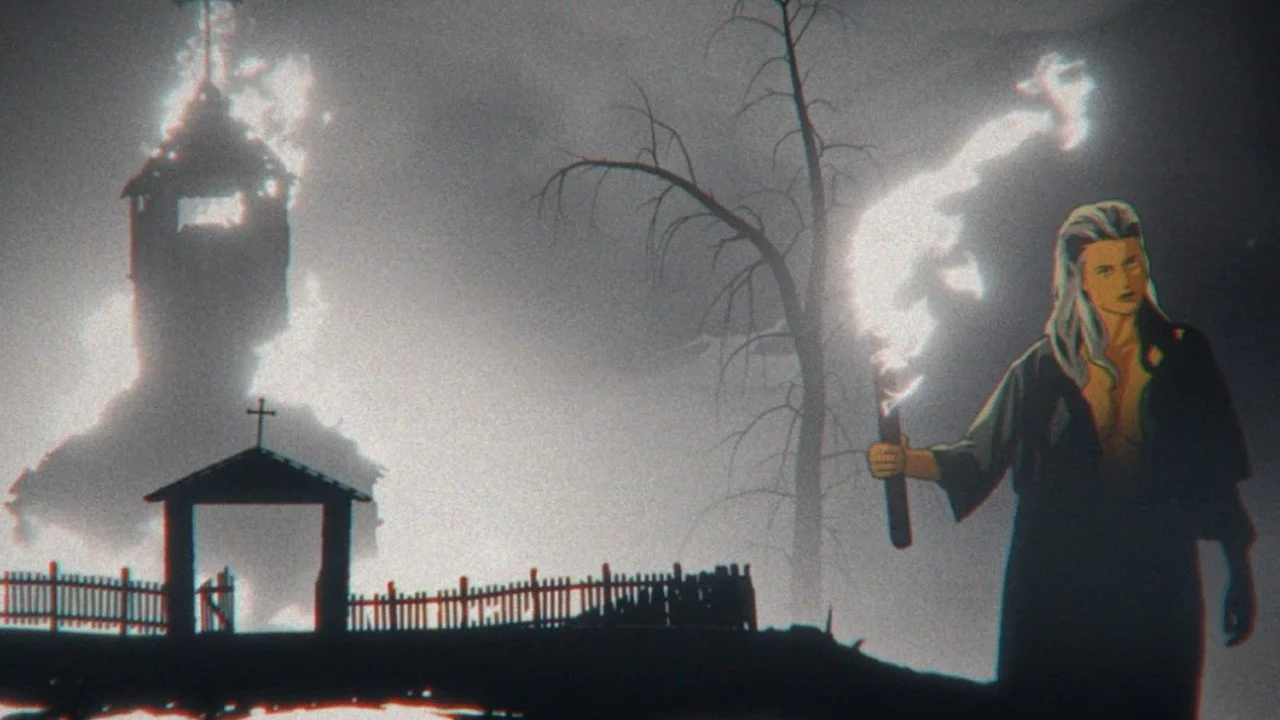
While historically animation has largely been reserved and most commonly associated with content meant for children, more and more titles are taking the stage to prove that the medium can be used to tell more adult-centered stories, with it becoming more and more common to see these films celebrated and recognized. While this has always been a buried truth within the medium, what originally were more obscure titles that showed an exception have continually grown in recognition to now stand as a known expectation of each year's animated lineup of releases. Screening as part of the 2025 Fantasia Film Festival, Raitis Ābele & Lauris Ābele's Dog of God challenges just how disturbing and explicit animation can be, as it brings to life a 17th-century Swedish Livonian village where religion and sin clash with accusations of witchcraft being thrown around to identify who is to blame.
Make no mistake that Dog of God is a film that makes no effort to appeal or censor itself for anyone but the most mature of audiences. Nearly every frame of the film is filled with blood, gore, sex, and other similar adult content that is both shocking and vulgar. From the opening scene, which depicts the Devil being castrated, the film holds no punches and is undoubtedly going to be abrasive to audience members who feel more sensitive about the content they consume. These visuals seek to accomplish a number of different goals. From setting an overall feeling of tension and uneasiness to playing a deeper role in visualizing the moral decay of the religious village, these visuals, while upsetting, are not hollow and are not cheap tactics for eliciting a reaction.
This is baked with a clear passion from the filmmakers when it comes to history and myth. In a way that feels reminiscent of the career of Robert Eggers, who goes through painstaking work both in research and execution to create historical worlds that feel real and true to the time. Specifically in his 2015 feature, The Witch, Eggers masterfully utilizes this texture and period piece identity to craft a heightened narrative that speaks not just to the historical period in which the film is set, but also has echoes in the modern moment. The approach to world-building and bringing in historical context within Dog of God is also quite compelling and gives the film its own unique texture and identity.
A bold shot such as these visuals is needed for the film, as beyond the memorable delivery, the actual narrative of Dog of God can admittedly feel somewhat basic and lacking. Having a conversation about the fading morality found within the church and those who feel a moral superiority due to religion is a conversation that may be relevant, but is nothing new for pieces of media to tackle. This is a simplistic narrative that makes its point early and mostly repeats throughout the film's 95-minute runtime. The nihilistic voice of the film goes through many of the expected avenues to explore this concept, never feeling quite as original or memorable as its visual identity, and never elevating itself to become more. Outside of a handful of smaller individual character arcs that feel more compelling, this lack of memorable substance causes the film's shorter runtime to feel longer than it actually is.
Dog of God is undoubtedly one of the more memorable animated features of the year. With a truly shocking visual presentation that uses incredibly beautiful animation to paint downright disturbing pictures, the film presents itself strong enough to ultimately overcome a narrative that is lacking a similar inspiration. While the feature is effective in facilitating the conversation it is trying to have, it is hard to say that the final statement made doesn't feel overshadowed by the production behind the film.