

Fantasia 2025: Occupy Cannes
2025 Fantasia Film Festival
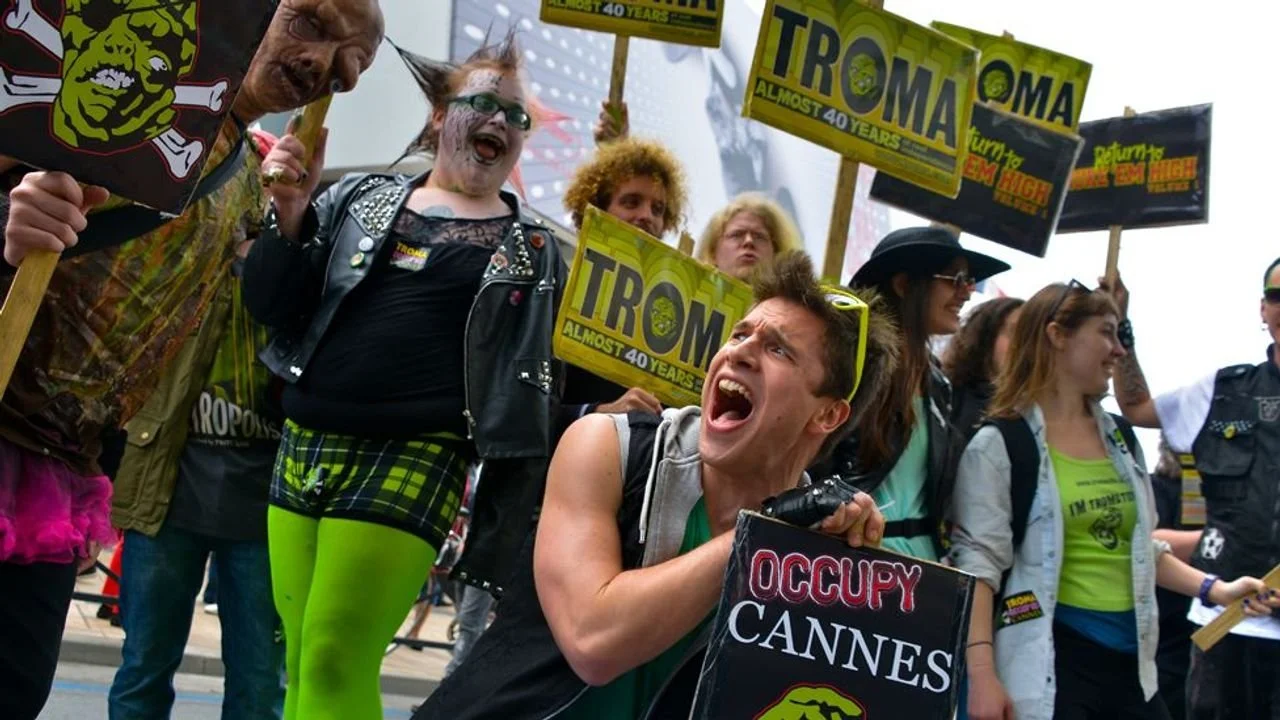
For the last 50 years, no studio has stood as such a consistent stalwart supporter of independent genre cinema as Troma Entertainment. Best known as the studio behind The Toxic Avenger, Troma has become a well-known name and continues to release new films to this day. However, with changing trends in the film industry regarding which films get distributed and made, Troma has had increased difficulty in releasing its films and staying financially afloat. One of the many techniques used by the studio is to go to the Cannes Film Festival, arguably the home of the cinematic bourgeoisie, and use guerrilla marketing to get their films in front of potential buyers and the public. Directed by Lily Hayes Kaufman, daughter of Troma founder and filmmaker Lloyd Kaufman, Occupy Cannes takes the audience alongside Troma as they head to Cannes to try and fight for distribution for their newest film, Return to Nuke 'Em High Volume 1, at the 2013 Cannes Film Festival, with additional footage ranging from 2013-2017.
Naturally, there is an endearing quality to the heart and soul present within Occupy Cannes. Not only is the Troma team fighting for Return to Nuke 'Em High Volume 1, but they are also fighting for independent art to stay alive and be accessible. The film does a strong job at introducing the mostly overlooked film distribution side to Cannes and exposing just how vulnerable independent genre cinema is. As volunteers travel from across the world to help Troma, it is hard not to get swept up in the passion and love felt for low-budget genre cinema, which is so often underseen and undervalued. It is a genuine honor for these volunteers to don a mask of The Toxic Avenger, and they believe so much in the cause that they are whilling to keep going even against warnings from the French Police. This infectious devotion is undoubtedly partly due to the focus of the film being presented by Kaufman, who has literally grown up alongside Troma, helping with every aspect of production and finally stepping into the role of director with this documentary. Kaufman discusses this bias openly and makes it apparent that she is incapable of being objective when Troma is the subject.
However, it does feel like Kaufman wants the documentary to be unbiased, and the film makes a series of truly baffling decisions as it attempts to present opposing views against what Troma is doing. While Occupy Cannes was never going to spend serious effort in fighting against Troma, the film oddly opens a can of worms as it discusses some of Troma's more controversial actions and never has the intention to play the conversation through. From the destruction of property caused by Troma's guerrilla marketing to being indifferent to using public nudity to elicit a reaction from random Cannes attendants, including children, the film will continually bring up problematic sides to Troma's behavior, but will then leave it without any resolution or actual discussion. Even the figures within the film seem split on the topic. When showing the use of public nudity at Cannes, the film cuts to the reaction of both Troma's PR manager and Lloyd Kaufman's wife, who talk down to the behavior and criticize the actions. To include these points directly works against the actual goals of the documentary and creates a desire for accountability that the studio never takes within the film's runtime.
Perhaps no conversation is quite as muddy as the presentation of Lloyd Kaufman. Obviously, it is unfair to expect a film made by his daughter to be able to parse all the sides of such an eccentric and larger-than-life figure who is also so close to her and someone she clearly adores. Similar to the conversation surrounding the problematic results of Troma's marketing, the film chooses to introduce Lloyd confusingly through statements and questions that work to invalidate the figure. Lloyd presents the world as being one large conspiracy theory working against Troma and independent film. As he wanders Cannes, he makes statements tying the actions and regulations made by the Cannes police to being directly a result of influence by the festival, who want to shut down Troma to preserve its clean and glamorous fancy look. Lloyd performs stunts, such as trying to attend the premiere of Inside Llewyn Davis in a colorful suit, which goes against Cannes' highly publicized black tie dress code, and makes an argument that his rejection from a screening is a deeper sign of problems within the film industry. While there is probably a kernel of truth to Lloyd's claims, even the film itself doesn't seem fully convinced, as it offers the suggestion that Lloyd is purposely lying and trying to create issues to generate this dynamic because he likes being the little guy and finds the battle against the system to be marketable. It also doesn't help that Lloyd's depiction throughout the film leans unlikable. As his volunteers complain about it being cold and rainy, Troma is unable to pay for ponchos, or say they don't want to continue due to the threat of being arrested by the police, Lloyd is seen calling them names and saying they are cowards. Lloyd yells about his conditions when he started going to Cannes and offers no support or empathy for anyone else, outright mocking them.
While some might celebrate how Occupy Cannes is dedicated to capturing the truth of the moment and not turning into an overly sanitized propaganda piece, the inclusion of these scenes without ever having the interest in going deeper with these conversations effectively ruins the film. How can one fully support a studio when its leader is being cruel and rude to volunteers who are spending their time and money to support the company? How can the audience celebrate unconventional marketing when the negative consequences of these actions are expressed but never rectified? In being so close to the material, it feels like Kaufman is trying to navigate a ship through a massive storm and innocently can't navigate the waters she finds herself in.
It doesn't help that for a film so interested in discussing the state of the film industry, the state of film festivals, and the state of genre cinema, much of the focus is on events and perspectives from over a decade ago. The film, largely taking place during the 2013 Cannes Film Festival, cannot make a statement on how these topics have evolved over the last 12 years with the rise of social media, streaming, and film influencers. There has literally been an entire global pandemic that changed every aspect of society between the footage being shot and the film being released. This could have been solved by cutting down the footage from 2013 and including new footage discussing the state of things more recently, but the film decided this wasn't an important factor to consider.
Occupy Cannes is a difficult film to fully digest. While both in delivery and topic, the film finds conversations that strike as meaningful and inspiring, it also continually tears itself apart and sabotages its own impact. In trying to show the truth, the film is never able to make a clean point and refuses to put in the time and work needed to untangle the knot of feelings it captures. Ultimately, Occupy Cannes needed a stronger and clearer voice to generate the film that the documentary truly wants to be, instead becoming messy and conflicted when this should have been an easy home run.